

Mohawk Ballard LVP vs. Other Luxury Vinyl Planks
Two luxury vinyl planks can look almost identical in a sample rack and perform very differently once they are on your kitchen floor. One may have a dense rigid core and a wear layer that hides scuffs for years. Another may flex underfoot, show the outline of every grout line from the tile beneath it, and look tired near the back door within a couple of seasons.
Picking the wrong plank usually means replacing a floor you expected to last, and paying for removal and a second installation. Luxury vinyl cannot be sanded and refinished the way hardwood can, so the construction you choose on day one largely decides how long the floor stays presentable.
This article compares Mohawk Ballard with the main types of luxury vinyl plank you will see while shopping. It covers the specifications that decide where Ballard lands, how flexible and rigid core planks differ on cost, durability, maintenance and climate fit, and how to preview Ballard in your own rooms before you buy.
The Short Verdict
Mohawk Ballard's place in the LVP market comes down to two details on its spec sheet: core type and wear layer thickness. Those details, more than the brand name or the color, determine whether it competes with budget flexible vinyl or with heavier rigid core planks. Manufacturers sometimes update collections, so confirm the specifications for the exact product and color you are considering.
For most households, a rigid core plank with a wear layer matched to the room's traffic is a practical target. Flexible vinyl still makes sense on very flat subfloors and tight budgets. Heavier planks with commercial ratings suit spaces with rolling carts and constant foot traffic.
Is Mohawk Ballard a Rigid Core Product?
The whole comparison depends on whether Ballard uses a rigid core or a flexible construction. That detail appears on the product's spec sheet, the carton label and the manufacturer's product page, so check it before you compare prices. Ask about these four specifications for the Ballard sample and for every plank you are weighing against it:
- Core Type: Rigid core planks typically use a stone plastic composite (SPC) or wood plastic composite (WPC) core. SPC tends to be denser and more dent resistant, while WPC is often thicker and feels a little softer and warmer underfoot. Flexible LVP has no rigid core and is typically glued down.
- Wear Layer Thickness: Manufacturers list this clear top layer in mils. It takes the scratches from chair legs and pet claws, and it is a separate number from overall plank thickness, so a thick plank can still carry a thin wear layer.
- Plank Size: Width and length change the look of a room. Wider, longer planks show fewer seams, but long boards are less forgiving of dips and humps in the subfloor.
- Warranty: Read the residential and commercial terms separately, check whether coverage is prorated, and note which installation and care conditions the manufacturer requires to keep the warranty valid.
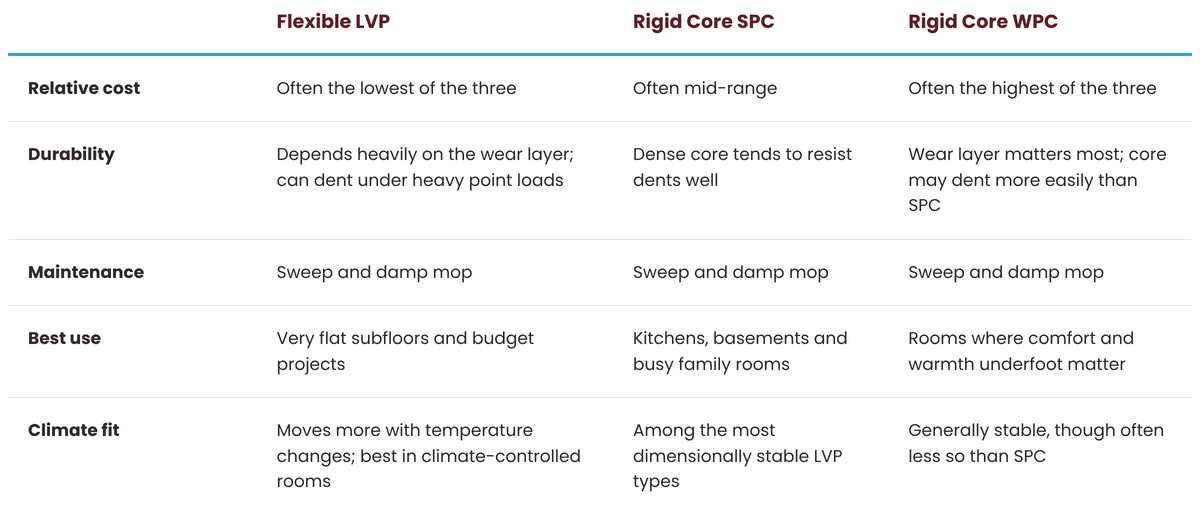
Once you know Ballard's core type, use the matching column in the table below to see how it compares.
How LVP Construction Types Compare
Cost
The price per carton is only part of the total. Flexible LVP follows every contour of the subfloor, so a project may need more leveling compound and prep labor before it goes down. A rigid core plank can bridge minor imperfections, which sometimes offsets its higher material cost.
Ask for a quote that separates material, removal of the old floor, subfloor prep and installation. That breakdown shows whether a cheaper plank actually saves money in your rooms. If the right plank stretches the budget, we offer local financing through Belco Credit Union.
Durability and Lifespan
Two things wear out an LVP floor: surface scratches and dents. The wear layer handles scratches, so dog nails at the back door or a rolling desk chair will show sooner on a thin one. The core handles dents, and a dense SPC core tends to resist the pressure of a refrigerator, a piano leg or a dropped cast iron pan better than a softer core.
Compare Ballard's wear layer number against the other planks on your list, then match it to the room. A guest bedroom needs far less protection than an entryway that sees boots, pets and grit every day. Our article on how durable luxury vinyl is explains the wear factors in more detail.
Water Resistance
Many luxury vinyl planks are marketed as waterproof at the plank level, which is a major advantage over hardwood and many laminates. Water can still reach the subfloor through seams and the perimeter expansion gap. A dishwasher leak or an overflowing washing machine can soak the subfloor beneath an intact floor.
Tight click joints on rigid core planks and well-bonded seams on glue-down planks both limit how far spills travel. Check what Ballard's warranty says about water exposure, since terms vary by manufacturer. For a broader look at the category, read our explanation of whether luxury vinyl is waterproof.
Maintenance
All three construction types share the same routine: regular sweeping or vacuuming, occasional damp mopping, and felt pads under furniture legs. Many manufacturers advise against steam mops and abrasive cleaners, so check Ballard's care guide before you buy cleaning products.
The practical difference is how forgiving each floor is. A thin wear layer shows fine scratches sooner, and high-gloss finishes tend to highlight them. Matte or textured finishes generally hide everyday scuffs better, which matters in households with kids and pets.
Climate Fit for Pennsylvania Homes
Homes in the Harrisburg area move between humid summers and dry heating seasons. Vinyl expands and contracts with temperature, and rooms with large sunny windows, sunrooms and three-season porches see the biggest swings.
Rigid core planks generally move less than flexible vinyl, which helps reduce gapping at seams. Every floating floor still needs the expansion gap and acclimation steps the manufacturer specifies. For a room without steady heating and cooling, confirm Ballard's approved temperature range on its installation guide before you choose it.
Installation Over Existing Floors
Core type also changes what Ballard can go over. A rigid core plank can often span small grout lines and minor dips, while flexible vinyl tends to show the outline of whatever sits beneath it. If your kitchen or bath already has ceramic tile, review our guide to putting luxury vinyl planks over tile before deciding whether to remove it.
Our factory-trained installers check subfloor flatness and moisture before the first plank goes down. Rushed prep tends to cause gaps, hollow spots and joint failures with any LVP line.
Previewing Ballard in Your Own Space
A plank that looks right under showroom lights can read warmer or cooler next to your cabinets and wall color. The Roomvo visualizer on our website lets you upload a photo of your room and see a flooring option in it before you order. Our showroom has operated from the same Harrisburg location since 1946, and you can browse samples there in person.
If getting to the store is difficult, our shop at home service brings samples to you. Lay the Ballard sample next to a competing plank in the actual room, and look at both in morning and evening light before you decide.
Who Should Pick Which
A rigid core plank with a mid-weight or heavier wear layer fits most kitchens, finished basements and open living areas in a typical Harrisburg home. If Ballard's spec sheet shows that construction, it belongs on your short list for those rooms.
Flexible LVP suits very flat subfloors, low-traffic rooms and rentals where budget comes first, as long as you accept that it may wear sooner. Offices, retail floors and lobbies with rolling equipment call for planks rated for commercial use, and our commercial flooring installation team plans for that traffic.
Find Your Floor with Harrisburg Wall & Flooring
If you cannot yet say whether the Ballard sample you liked has a rigid core, what its wear layer measures, or how it looks next to your cabinets, those are the gaps to close before you order. Harrisburg Wall & Flooring offers design consultation, in-home measurement, shop-at-home sampling and factory-trained installation for homeowners and commercial property owners. When you are ready to compare Ballard side by side with other planks, contact us.